


Z is for Zenith
Several definitions exist for “zenith,” but the one I want to focus on is:
zenith
noun | zenith | /’zē•nəth
- culminating point
- a highest point or state; culmination.
We made it! We’ve reached the top of challenge mountain, and finished this challenge of writing a blog post nearly every day, theming each after a letter of the alphabet. Continue reading “Z is for Zenith”

Y is for You … Thank You!!
After how wonderful this month has been, I don’t think I could have picked anything other than you, my dear reader, for the letter Y.
Seriously.
I expected this challenge to be fun, crazy, and mostly, just a way to prove to myself that I really can blog (almost) every day. I never expected to find so many fascinating blogs, meet lots of fun people, and see more traffic in one month than this blog has seen ever. Ever. I hardly believe it, but without readers, that wouldn’t be possible. So it’s you I have to thank! Thank you for reading, viewing, commenting, and more! Continue reading “Y is for You … Thank You!!”

X is for Xylophone, and Avoiding Clichés
After consulting multiple dictionaries and word guides, it was difficult to find an English word that suited my purposes and started with X. (No joke, there is not one word that starts with X on Merriam-Webster’s list of 3,000 English core words.)
No matter how hard I looked, I kept coming back to “xylophone” — the X word most of us learned as children from our alphabet books.
And the ubiquity of xylophone led me to think of a related topic: clichés.
Much like the prevalence of xylophones in our childhood memories, clichés are everywhere. And that’s why we have to avoid them. Continue reading “X is for Xylophone, and Avoiding Clichés”

W is for Words
Ever since I was old enough to use a dictionary, I have loved words. Even before I loved writing, I appreciated the mechanics of it, and words were the first way I came to be interested in writing. Continue reading “W is for Words”

V is for Value
What defines value?
For writers, this is a question we must ask frequently. How do we write things that will have value for our readers?
Value can mean many things. There’s literary value, popular value, sentimental value, monetary value. Some of these matter more to some writers than others. Continue reading “V is for Value”

U is for Urban
Yesterday I talked about how much I love to explore outside, close to nature while hiking, how I like to get away from it all and absorb myself in the great outdoors.

And while that remains true, today I’m going to talk about the opposite: urban exploration.
I’ve decided that I’m happiest in a mid-sized urban setting, somewhere not too big and not too small. I love living somewhere big enough to have options, but small enough to not feel overwhelming. I’m very much a Goldilocks kind of girl — not too big, not too small, but just right. Continue reading “U is for Urban”
T is for Trails
I remain convinced that one of the best ways to see a place is on foot.
Hiking connects you to a location in a way that no fuel-powered form of transportation can. While I can’t help but appreciate the modern wonder that is planes, trains, and automobiles, hiking affords more natural and up-close adventures. Much like the reasons for my love of kayaking, I enjoy being in nature, taking in my surroundings gradually.
Probably my favorite hike ever occurred in Mount Rainier National Park. Continue reading “T is for Trails”

S is for Short Stories
Lately, even though I mostly write novels, I’ve been playing around with short stories. I’ve been doing this:
- For the challenge of it. It’s fun to shake things up and develop new skills.
- For improving my writing. Condensing a story into just a few pages or paragraphs takes discipline and subtlety, and I’m hoping this close examination of short stories will improve my longer ones.
- For the sake of submission. Is it just me, or are there more contests out there for shorter works? With society’s growing inclination for shorter things, I think it makes sense to learn how to write well in a short space, especially if you want to publish.
R is for Realistic
As much as I love adventure, escaping reality is impossible. For those of us who love to dream and fantasize and plan the next adventure, setting realistic expectations can be difficult.
However, being realistic about a project or a novel or a vacation can be key to enjoying it. If you set up lofty, unrealistic expectations, experiencing disappointment when they’re not fulfilled can be crushing. Similarly, underestimating how long something will take or how much you’ll spend on a trip can cause problems like missing deadlines or overspending. Continue reading “R is for Realistic”
Q is for Quotidian: What’s Your Writing Habit?
Definitions for “quotidian” range from “daily” to “usual or customary” to “ordinary or commonplace.”
I chose this word because its varying definitions highlight an ongoing debate in the writing community: should you write every day?
Continue reading “Q is for Quotidian: What’s Your Writing Habit?”

P is for Passport, And My First Trip Out of the Country
I love the concept of passports.
A clear proof of citizenship, a gateway to the world, a reminder of all the places you’ve been and have yet to go to, and a repository of amazing memories abroad and less pleasant ones of going through customs — that little passport is essential to a traveler.
I got my first passport at the age of 15, a few months before I took my first trip out of the country to Ecuador. It was a very exciting time for me, as not only would it be my first time out of the country, it would be my first time traveling alone, and I was thrilled with the idea of so much independence. Continue reading “P is for Passport, And My First Trip Out of the Country”

O is for Overthinking
I wonder at what point the term “overthinking” was coined. Because you’d think thinking can’t ever be bad, no matter how much of it you do.
And yet, one of my biggest obstacles to productivity is overthinking.
Overthinking stops me from getting past the idea stage of writing and on to actually writing. It keeps me locked in the planning stages of a trip, without ever really crossing over into enjoyment and engagement when I’m on the trip. Continue reading “O is for Overthinking”

N is for Notebook
While I tend to be a digital notetaker, I do love to keep paper notebooks near me.
This is partly because I like to have a backup when technology fails, and partly because when it comes to touch-texting versus writing, writing is usually faster for me, and easier to format. If I don’t have access to a physical keyboard, and I’m choosing between taking notes on my phone versus paper, I’m usually going to pick paper. This tends to make notebooks my best friends for ideas on the go, like tracking my travels or jotting down a story idea. I especially love notebooks for lists. There’s something very satisfying about hand-formatting a great list. (I know, I’m a little weird and a bit OCD; you don’t have to remind me.) Continue reading “N is for Notebook”
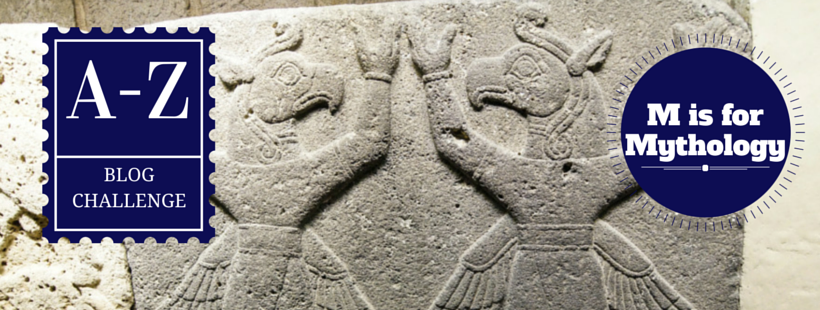
M is for Mythology (And Midway through the Challenge!)
Mythology has always fascinated me. Since first reading Bulfinch’s Mythology in late middle school, I’ve enjoyed reading all types of old stories and legends, from classic Greek and Roman mythology to more obscure mythological traditions like Basque stories to fairy tales and urban legends.
Continue reading “M is for Mythology (And Midway through the Challenge!)”

L is for Local
Love of travel starts locally.
Passion for adventure begins in a backyard, on a neighborhood walk, with a bookshelf, when you accidentally discover a new favorite restaurant down the street. Local adventures lead to longings for elsewhere.
 Booked & Ready